👉Spotlighting HR executives who are shaping the future of work, part of CFW Careers’ commitment to excellence in retained executive search, global executive search, and professional coaching.
Welcome to our HR Leaders in Focus blog series, where we feature conversations with HR executives shaping the future of work. These leaders share strategies, lessons learned, and insights on the evolving role HR plays in driving organizational success across industries.
At CFW Careers, we bring together the expertise of global executive search and the personalized guidance of professional coaching. Our dual practice allows us to support organizations in building strong leadership teams while helping individual leaders navigate transitions and accelerate their growth.
Rachel: Today, we’re speaking with Anthony Onesto, named “Top 50 HR Leader” and current Principal, AI & People Solutions at livingHR. Anthony, thanks for joining us!
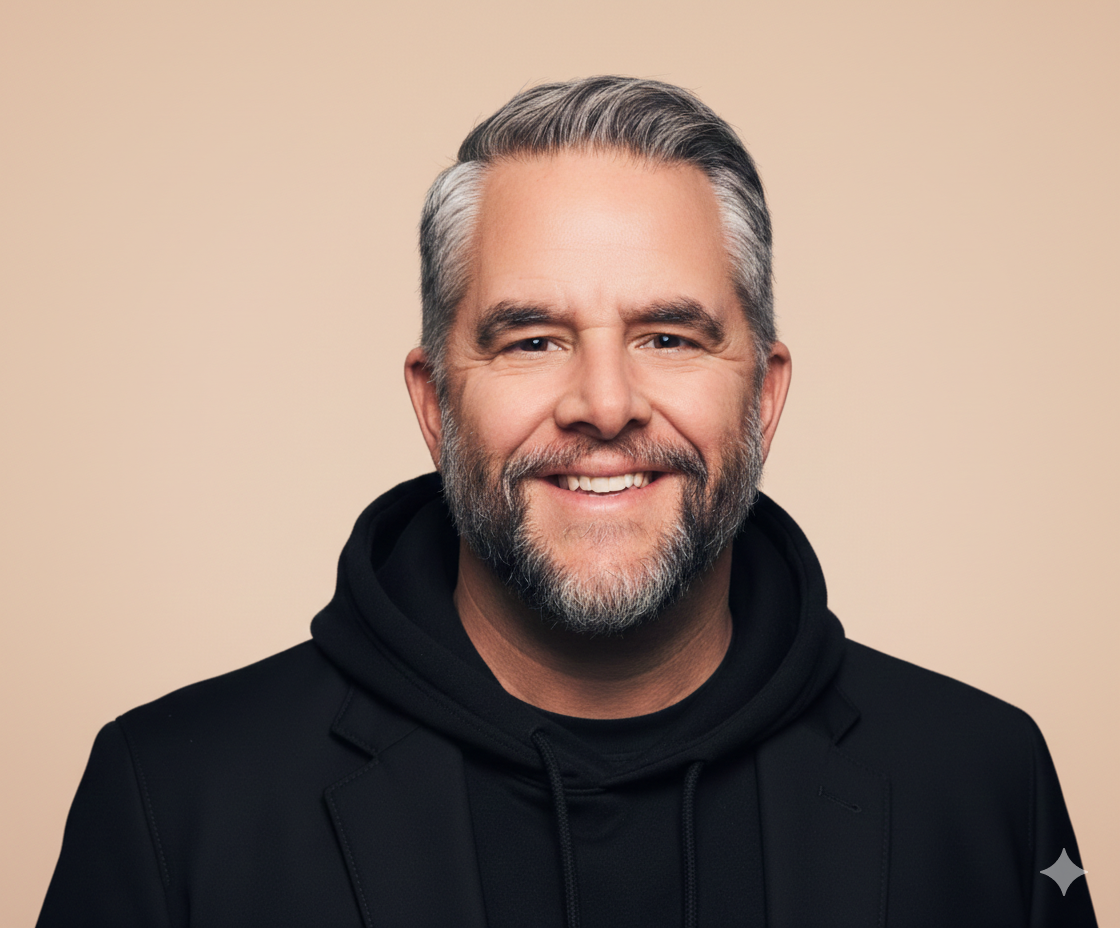
Anthony Onesto | Principal, AI & People Solutions | livingHR
So we’ve worked together before as an external recruiter on a leadership search when you were the Chief People Officer at Suzy; it always struck me how successfully you were able to position yourself, the People leader, as the functional head of a core business driver. It’s something you seem to have always been good at, and it’s a struggle for most leaders we know in the HR function. How did you manage that?
Anthony: It started with my failed attempt at being an accountant. That perspective put me in the place of thinking of things from the business perspective very early in my career. I think it's really that I think of the overall business first and the HR function second in whatever context I’m in. I think it's also just generally my curiosity about business. I walk into any sort of business, and I'm analyzing the process and how they do things. So I think being curious first is key.
And then if you add in some of the other experiences I’ve had: twice in my career, now three times at 15Five, I moved into a functional business role. One was with a learning and development platform as their President. And the other was the General Manager for a Toronto-based company that was expanding in the US. I think that jumping out and being able to see HR from a different angle is helpful. It's a very different view of HR and things that happen within the business when you're on the business side of things.
But that curiosity around business has been critical.
Rachel: It’s interesting you focus on curiosity. As an executive coach, I’m constantly focused on this: how to integrate your ideas into a conversation by asking great questions, being curious, and showing how you think and where you can make an impact. I often tell people to act like a consultant when on an interview (show them how you are thinking/analyzing/processing), and it strikes me that the same advice could be valuable as an HR leader.
Anthony: It definitely is. I mean, I think it's such an unlock. That kind of curiosity has been so critical in my career. But also I think just generally now, especially with AI, if you have AI answering all the simple questions, I think curiosity is going to be the superpower for humans. So I love where you're headed in terms of that direction in coaching.
Rachel: That leads to AI. I’m curious about any potential limits you’ve identified around AI usage. For me, I’m fascinated (and worried) about our cognition generally. What happens to our creative output if we stop thinking? We’ve actually set a limit on our team at CFW: we aren’t putting out "vague jumbly fluff" from AI anymore. We’d rather put out less content that has real value and is creative content we actually came up with. Have you identified any specific limits?
Anthony: Can I say my opinion on that changes drastically day-to-day? I try to stay on both sides of the fence. In some cases, I see it as an enabler of employee value. If you think of the main driver of value within an organization are its people, and you look at that as a metric of employee long-term value like customer long-term value. AI could be an augmentation and accelerator and an alpha. But that’s where I think we're getting it wrong right now, where CEOs are like, I'm firing people and the AI replaces them. We're not there yet. I don't know if we'll ever be there.
Because I'm an optimist, I'll let the AI try everything. I won't have limits. I'll be like, let's see if I can do this thing. And if the output is better than what I can do, I'll say: have at it. If the output is half-assed or whatever they're calling it “slop” these days, well, it can't be good at everything.
I’ve been thinking about this human-on-the-loop idea, where you’re adding your voice to the output, versus human-IN-the-loop, where a thing shouldn't happen unless a human approves it. And there was a recent report - there was research that was done that talked about how AI is actually going to depreciate the institution because of what you talked about; humans are not practicing these basic skill sets because of AI.
So it depends on what day you ask me. Today, I'm kind of in the middle. And then I also think about the macro impact of these things. Markets are two sided. You need people to produce. And if all the robots are producing, who's consuming if no one's working? And so, when I see CEOs laying off all these employees and then getting a stock bump two days after, I'm like, is anyone not seeing what's happening here? Like those same people, if they're not working, they're not consuming, which is basically paying for the software you're selling into all these companies. So like, where does this lead?
It depends on what day you ask me, but I don't have a moral compass like, hey, I don't want the AI to do this particular thing. It's more about can it do this and what's the output? Is it quality enough for me?
Rachel: I appreciate that. On that note, I have a bigger question, zooming out on the HR function as a whole. What do you feel is the biggest trend in HR and People functions this year, right now, in 2026?
Anthony: It’s AI. It’s the internet, mobile, and social transformations all over again. Boards are pushing CEOs, and CEOs are looking for someone to give this to. Most HR folks are still in level one of this transformation, which means there’s great opportunity. It’s not machines OR humans. It’s a combination of the two that I think is going to be the winning solution. So yeah, AI is the trend.
Rachel: It makes sense. If HR leads the conversation on headcount, and headcount is now headcount+AI=output, then HR should be leading that.
Anthony: And we're seeing that's not happening right now. If you see what's happening across organizations, for example, what happened at Klarna recently. They celebrated the fact that they eliminated positions and now they're rehiring everyone back because they realized, wow, AI is not a replacement for every single human in my company. It's AI and people together. That's what I've been professing. And I stole that from a book called Race Against the Machines that I read 12, 15 years ago because we've been through this. They say history doesn’t repeat, it rhymes. But it's, you know, like we've been through this before when the internet took over, everyone freaked out. These two MIT economic professors said, like, is it going to be machines? Is it going to be people? It's both. It's the combination of the two. I continue to believe that.
Rachel: Absolutely. Thank you very much for taking the time to chat me about all of this. Your thoughts are so helpful as we think about how to navigate the People function in the year ahead. Thanks for joining us!
At CFW Careers, as a firm specializing in retained executive search, we know that placing the right leaders in the right roles creates impact that lasts well beyond the hire. This series reflects our commitment to spotlighting the voices of HR leaders who are advancing the profession and shaping workplaces of the future.